
Unframed Collection partners with NUMIX Lab, an itinerant European event that brings together immersive creation professionals in dialogue with cultural institutions across the continent. The 6th edition in 2025 brought together 459 participants from around the world across 16 venues in Budapest, Veszprém, Vienna, and Linz, fostering exchanges between Europe and North America around immersive cultural practices.
On this occasion, we met Alicia Baudry, Head of Digital Projects at the Château de Versailles. One of the most visited heritage institutions in the world, Versailles is currently engaged in an active reflection on the renewal of its mediation formats. Balancing respect for an exceptional historic site with a strong commitment to innovation, the institution develops web-based, immersive, and interactive projects aimed at enriching visitor experience and strengthening engagement with historical narratives.
In this interview, Alicia Baudry discusses the specific challenges of integrating digital tools within a heritage institution of this scale, and how narration and interactivity, conservation and innovation, can be articulated to make history more vivid, engaging, and memorable.
People come, they are amazed – and that is already wonderful. But what do they actually retain? What experience have they lived through? What have they understood, felt, remembered? In my view, digital projects help answer these questions by including the visitor more actively – through immersion – by allowing them to experience a story – through narrative – and by enabling them to interact with that story – through interactivity.
– Alicia Baudry
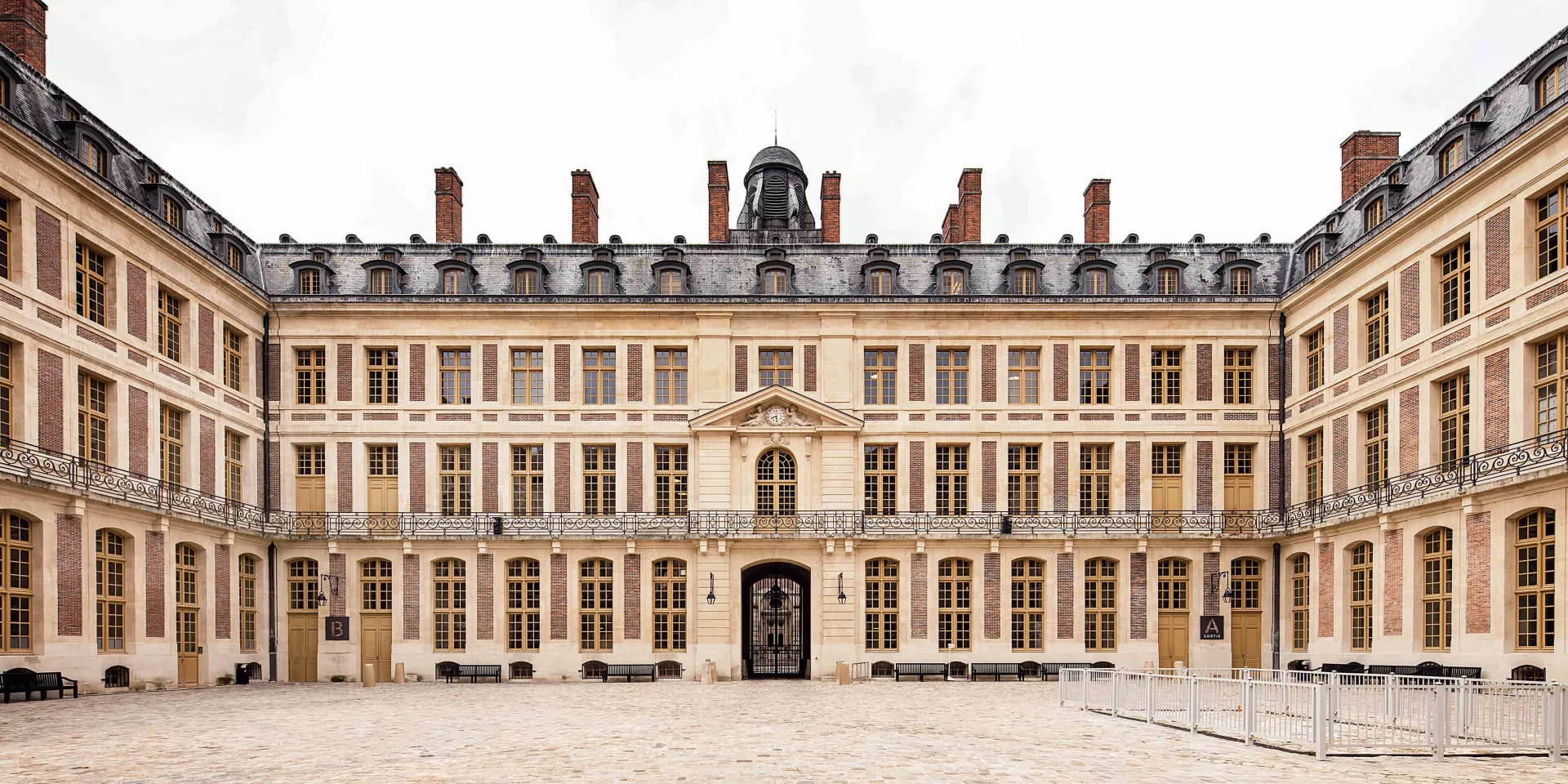
To begin, could you introduce yourself, explain your role at the Palace of Versailles, and describe how you contribute to the institution’s digital, innovative, or immersive projects?
Alicia Baudry – My name is Alicia Baudry. I have been Digital Project Manager at the Palace of Versailles for four years, and I primarily oversee the institution’s web and immersive projects. Versailles is one of the most visited monuments in the world and in France; our most recent attendance record was around 8 to 9 million visitors.
In this context, our objective is clear: to offer mediation formats that move slightly beyond our traditional classicism – which is also part of our identity – toward more immersive, interactive, and narrative approaches. The idea is to take visitors where they might not necessarily expect to go and to renew the way they enter into history.
The Palace of Versailles has been exploring new mediation formats for several years – applications, interactive devices, audiovisual content, augmented experiences. How do these tools influence the way visitors discover the heritage you present?
A.B. – The Palace of Versailles has been exploring new mediation formats for several years – applications, interactive devices, audiovisual content, augmented experiences. How do these tools influence the way visitors discover the heritage you present?
Versailles is an extremely classical site, with equally classical content: the history of France in its most emblematic form. The risk in such a context is to bore or fatigue visitors, even if the site remains visually spectacular and naturally attractive.
People come, they are amazed – and that is already wonderful. But what do they actually retain? What experience have they lived through? What have they understood, felt, remembered? In my view, digital projects help answer these questions by including the visitor more actively – in other words through immersion – by allowing them to experience a story – through narrative – and by enabling them to interact with that story – through interactivity.
Versailles is both a historic site and a field for cultural innovation. Could you tell us about some digital or immersive projects you have recently developed or supported, and the objectives you were pursuing?
A.B. – A recent project I worked closely on is a virtual reality experience developed with Gédéon Programme, Small Creative, and HTC Vive, entitled The Sun King’s Lost Gardens.
In this immersive experience, visitors move freely through three locations from the gardens of Versailles that have since disappeared, dating back to the reign of Louis XIV. The first is the Menagerie – essentially a zoo featuring exotic animals – with which visitors can interact. The playful dimension works particularly well, especially with children. The second location is the Labyrinth, where visitors must find their way out, adding a strong game-based component. Finally, the Grotto of Thetis, perhaps the most poetic part of the experience. Originally built beneath a reservoir supplying water to the fountains, it was later destroyed to make way for a new wing of the palace.
Throughout the experience, André Le Nôtre guides visitors and explains his vision for the gardens – the system of perspectives and the element of surprise at each turn. It is a successful example of an experience that is both poetic and educational: visitors leave with both an emotional impression and a renewed understanding.

For a heritage institution of this scale, what are the main difficulties in integrating immersive or interactive technologies?
A.B. – The first major issue is visitor flow. Welcoming so many visitors is a privilege, but it requires extremely rigorous organization. We cannot allow visitors to remain stationary for ten or fifteen minutes in a key room along the traditional tour route. Immersive experiences require time, whereas the historical route demands continuous circulation. This is why we believe it is essential to have dedicated spaces for immersive experiences – whether VR or other formats – rather than integrating them directly into the classical tour.
The second challenge concerns conservation. We operate within a historic monument that must be preserved at all costs. Installing technical equipment in a centuries-old palace raises significant constraints. Every solution must be carefully designed with respect for the site. It requires more reflection, but solutions can always be found.
In your view, what are the most promising directions for the future of digital innovation at the Palace of Versailles?
A.B. – Immersion is an extremely powerful mediation tool. It transforms the relationship to heritage in a rather magical way. Artificial intelligence is another very promising direction. It can support collection management, presentation, and mediation. We recently developed a project with Simona, based on AI, which allows visitors to scan a QR code and interact with a statue. We see people stopping, engaging in conversation, and becoming involved. It works very well.
I believe the future of digital innovation at Versailles lies in this dual dynamic: immersion and artificial intelligence, serving a more engaging and memorable visitor experience.