


Unframed Collection partners with NUMIX Lab, an itinerant European event that brings together immersive creation professionals in dialogue with cultural institutions across the continent. The 6th edition in 2025 brought together 459 participants from around the world across 16 venues in Budapest, Veszprém, Vienna, and Linz, fostering exchanges between Europe and North America around immersive cultural practices.
On this occasion, we met Markus Wiesenhofer, Deputy Head of Communications & Marketing who co-heads digital innovation at the Belvedere Museum in Vienna. One of the oldest museums in the world, celebrating its 300th anniversary in 2023, the Belvedere is home to over 20,000 works spanning from the Middle Ages to contemporary art. Today, the institution is actively exploring how digital technologies – from augmented reality to gaming platforms – can renew audience engagement while remaining faithful to its historical legacy.
In this interview, Markus Wiesenhofer discusses how immersive and interactive approaches can enrich the museum experience, the development of the BelvedereGames programme as a tool for reaching younger audiences, and the strategic, ethical, and technological challenges that come with integrating emerging media into a major cultural institution.
Beyond the technical aspects, there are also important ethical questions. As a museum, we have a strong responsibility when adopting disruptive technologies such as AI or immersive media. We need to constantly ask ourselves what kind of experiences we want to offer, and for what purpose we are using these technologies.
– Markus Wiesenhofer
The Belvedere has a long-standing reputation for its historical and modern art collections. From your perspective, how can digital, immersive, or interactive approaches enrich or reinterpret such a classical museum context?
Markus Wiesenhofer – The Belvedere is one of the oldest museums in the world – we celebrated 300 years in 2023. At the same time, we want to remain a young and relevant institution, especially for younger audiences. That means engaging with them on their own terms, using the technologies they are familiar with.
For us, it is essential to understand the potential of digital innovation and to gradually integrate it into our practices. With nearly two million visitors each year from all over the world, we see technology as a way to stay connected with our audiences beyond the physical visit, to engage them with art, and to help them better understand the cultural heritage we preserve.
Belvedere Games is one of the museum’s initiatives exploring playful and digital engagement. Could you briefly present the programme and explain how it fits into your broader strategy for audience experience and innovation?
M. W. – Belvedere Games is an initiative we launched in 2023, during our anniversary year, with the goal of reaching younger audiences in an accessible and free way.
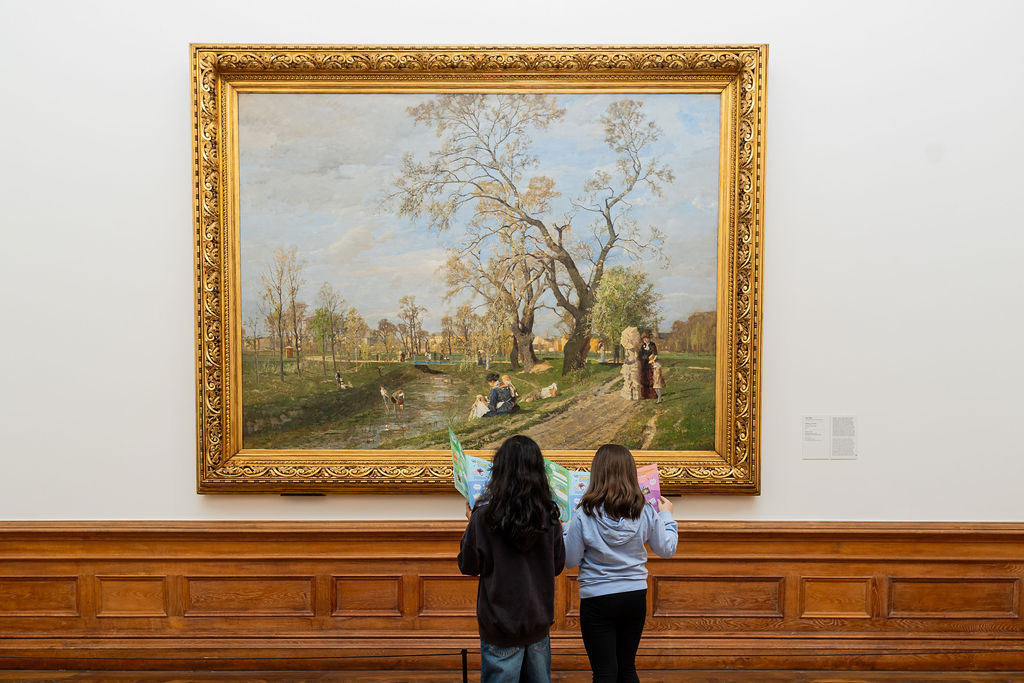
We started with an augmented reality game in the museum’s baroque gardens, inspired by Pokémon-style mechanics, called The Fantastic Palastics. Visitors – especially children – could explore the gardens through a playful digital experience. Following its success, we expanded the concept with a second mission inside the museum, Mission Museum, which allows families to discover the collection through an interactive, multimedia experience.
We then developed a second layer with Art Leap, a game on Roblox, which has reached more than 2.4 million players. This platform allows us to engage with young audiences globally, often introducing them to Austrian art – and even to museums – for the first time.
Finally, an important aspect for us is co-creation. We organize game jams where developers from across Europe are invited to create new games using museum content. This participatory approach is central to how we imagine the future of cultural institutions.
When introducing digital or immersive formats, what are the main challenges you face in terms of curatorial coherence, technology, or audience expectations?
M. W. – There are many challenges when working with emerging technologies. First, there is a learning curve: these formats come with new languages, new tools, and new stakeholders. But beyond the technical aspects, there are also important ethical questions. As a museum, we have a strong responsibility when adopting disruptive technologies such as AI or immersive media. We need to constantly ask ourselves what kind of experiences we want to offer, and for what purpose we are using these technologies.
These questions cannot be answered alone. They require ongoing dialogue with artists, partners, other institutions, and technology experts. It is through these exchanges that we can define our position and shape meaningful uses of these tools.
Looking ahead, what directions or emerging practices in digital and immersive culture do you see shaping the future of the Belvedere?
M. W. – We are currently living through a highly transformative moment, especially with the rapid development of artificial intelligence. We are still in the process of understanding what this means for our institution, for our work, and for our relationship with art and artists.
To stay connected to these developments, we invest in research and knowledge-sharing. Our CIVA Festival, for instance, is an important platform where we engage with current technological and artistic questions. We also organize an annual online conference dedicated to the art museum in the digital age, which allows us to explore new perspectives and learn from a wide range of practitioners.

Looking ahead, I believe that the future lies in continuous experimentation, collaboration, and openness. There are many projects and directions to explore, and we are committed to remaining an active player in this evolving landscape.
